Helpline 0208 569 6444
Send email [email protected]
Address The Old Pumping Station, Pump Alley, Brentford, TW8 0AP
Latest Sadaqah Jariyah

Where There Was No School, a New Future Began

Before the first brick was laid, there was only open ground and a question that parents in Village Noor Pur had carried for years:

Where would their children learn?

In this rural part of Muzaffargarh, families were doing everything they could to survive and provide for their children. Yet one of the most important things a parent could offer “the opportunity to receive an education”, remained difficult to access.

Children were growing older without a suitable school close to their community. Parents worried that another year would pass, followed by another, until education became a dream their children could no longer reach.

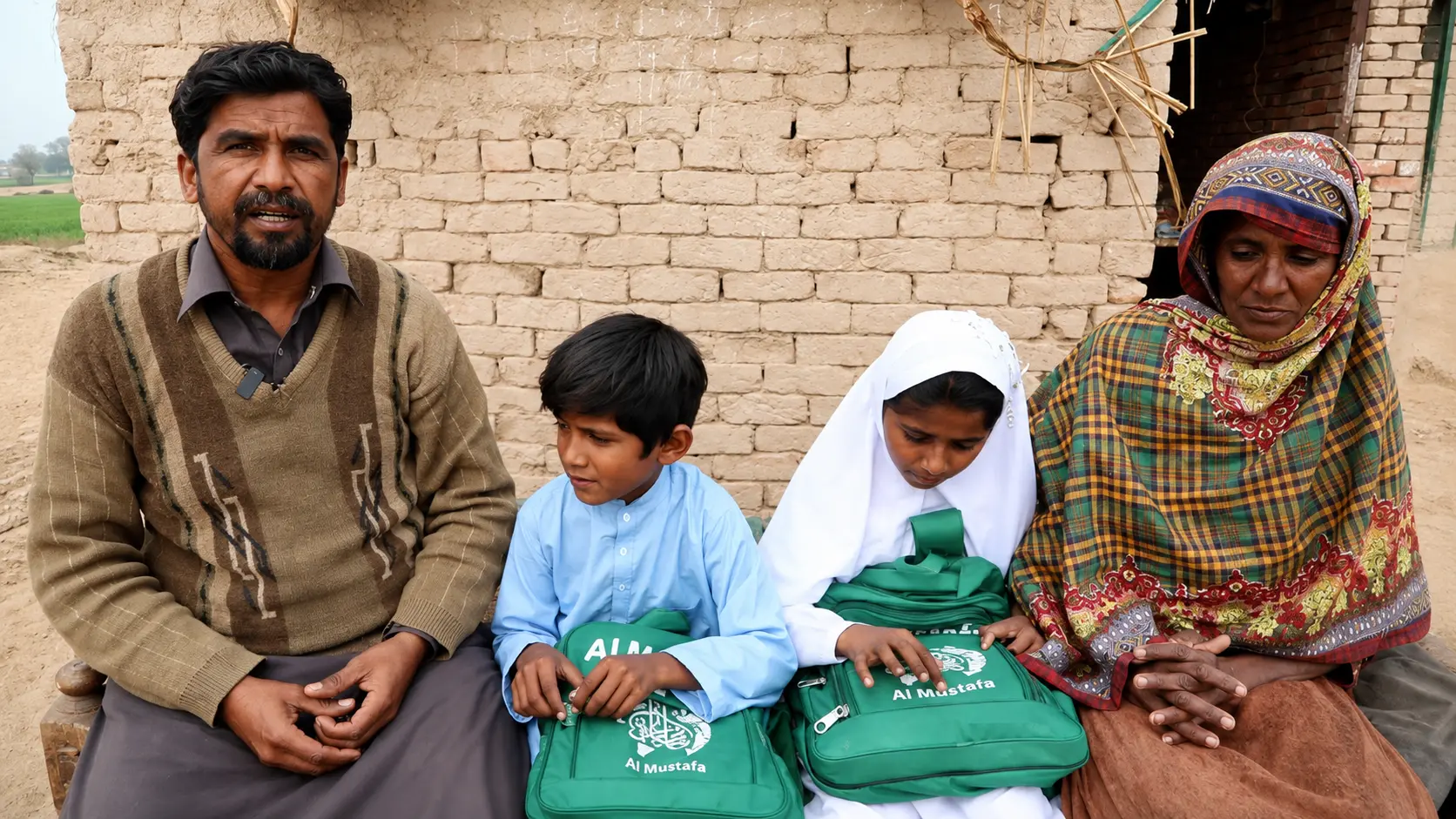
For Rashid Ahmed and his wife, Amina Bibi, that fear was deeply personal.

They had four children: two sons, Bilal and Hamza, and two daughters, Maryam and Ayesha. The family lived quietly, surrounded by fields and rhythms of rural life. Rashid and Amina wanted the same things most parents want: safety for their children, dignity for their family and a future better than the one hardship had given them.

Then Al Mustafa Welfare Trust arrived with a plan, not simply to support a few children for a short time, but to build a school from the ground up. 

The Education Crisis Hidden in Rural Communities

The challenge extends far beyond one village. UNICEF estimates that 25.1 million children aged 5-16 are out of school in Pakistan, including approximately 9.7 million children in Punjab. For families in Noor Pur, these figures were not simply statistics. They reflected a daily reality 

For children living in major towns and cities, a school building can feel like an ordinary part of life. There are classrooms, desks, teachers, books and a familiar routine that begins each morning. In isolated and low-income areas, none of this can be taken for granted.

A child may be ready to learn, but there may be no suitable classroom. A parent may value education, but the nearest school may be inaccessible or unable to accommodate more pupils. Girls can face even greater barriers when families do not have access to a safe and appropriate learning environment nearby. The result is not a lack of ambition. It is a lack of opportunity.

Al Mustafa Welfare Trust’s Build a School Appeal focuses on providing safer learning environments in rural and disadvantaged communities. As a leading charity, we construct new schools and renovate unsuitable buildings so that more children can access education.

A Family’s Struggle in Noor Pur Village

Rashid knew that his children were intelligent and curious. Like other children, they asked questions, played together and wondered about the world beyond their village. He understood that once children fall behind, returning to education can become increasingly difficult. As children grow, they can become responsible for household duties or support their parents. What begins as a temporary break from education can eventually become permanent.

As a father, Rashid wanted to protect his children from that future.

“I watched my children growing older, but I could not give them the education they deserved. It was painful because I wanted them to learn and have a better life. As their father, I felt helpless. I could work for them and care for them, but I could not build a school on my own.”

For Rashid, the absence of a school was not simply a missing building. It was a barrier standing between his children and the lives he hoped they might one day have.

Parents seated with two schoolchildren holding green backpacks outside their rural home.

Amina shared the same hopes for all four children, but her concern for Maryam and Ayesha carried an additional weight. She wanted her daughters to learn how to read and write. She wanted them to understand the world around them and grow into women who could face life with knowledge and confidence.

Amina had seen how easily poverty could narrow a girl’s future. Without education, even simple tasks could become difficult. Reading official documents, understanding health information, managing household finances or helping future children with their studies could all remain beyond reach. She wanted to see her children leave home in clean uniforms. She wanted them to carry books, sit in a classroom and return in the afternoon eager to share what they had learned.

Building Noor Pur’s School from the Ground Up

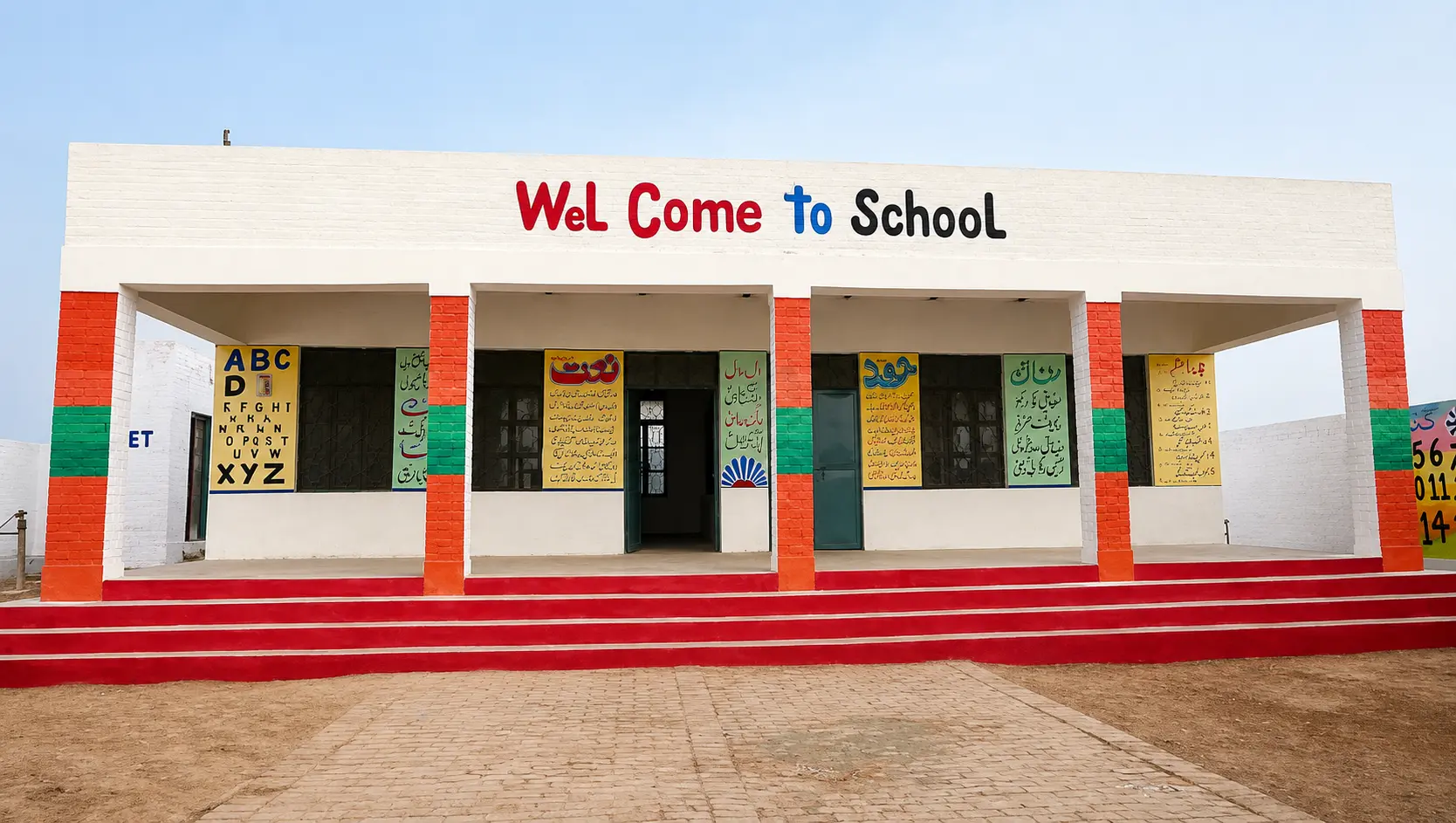
Al Mustafa Welfare Trust constructed the school from the ground up. Brick by brick, the empty site began to change. The construction team laid the foundations, raised the walls and created the classrooms. They fitted windows to bring natural light into the learning spaces, while a covered entrance and wide steps made the building welcoming and accessible for children. For families who had lived without a proper school nearby, watching the construction was an emotional experience. Each stage represented progress. The complete school included bright classroom spaces, desks for pupils and areas where teachers could deliver lessons.

Al Mustafa’s broader education initiatives include supplying disadvantaged children with books, stationery, uniforms and other learning essentials. These provisions matter because constructing a school is only the first step.

A classroom cannot fulfil its purpose without teachers, books, learning materials and children who receive the support they need to attend.

The Day the School Doors Opened

Front view of a rural school building with red steps and educational posters.

When the school was ready, the empty classrooms began to fill with voices. Children arrived wearing their uniforms. The boys wore light blue shalwar kameez, while many of the girls wore white headscarves. They gathered outside on the school’s red steps, holding the green Al Mustafa school bags they had received.

For some, it was the first time they had owned a proper school bag. Inside the classrooms, pupils sat behind wooden desks. Books lay open across the desks. A teacher stood at the front of the room and began the lesson. To an outsider, it might have looked like an ordinary school day. To Rashid and Amina, it was a moment they had feared might never come.

Amina had imagined this scene many times. Now she could see it with her own eyes.

“When I saw my children wearing their uniforms and carrying their school bags, I could not hold back my emotions. Before this school was built, I worried constantly about their future. That morning, I felt as though a door had finally opened for them.”

A Lasting Form of Charity

For Muslim donors, supporting the construction of a school can also become a meaningful form of Sadaqah Jariyah, a charitable act whose benefits continue over time. A donor may contribute today, but the school can keep serving children long into the future.

Teachers can carry the original act of generosity forward through each lesson they deliver. Children who learn to read, write and understand the world can share that knowledge with others. In time, some pupils may support their families and contribute positively to their communities, extending the impact even further.

The reward is not tied to one moment. It continues whenever the school is used for good. Whether a person funds a large part of a project or contributes what they can, their donation joins the support of others to create something no single struggling family could build alone.

Rashid could not construct a school by himself. Amina could not provide classrooms and teachers through hope alone. But when compassionate donors stood beside their community, the impossible began to take shape.

Three smiling schoolchildren sitting with their mother in a rural farming area.

Help Build the Next School

There are still children living in rural areas without a suitable place to learn. They are not lacking intelligence and ambition. They are lacking the classrooms, teachers and educational materials that many of us take for granted.

Through our appeal, we work to construct new schools and improve existing learning environments for children who might otherwise be left behind. Your support can help another village hear the same sound. Through our Build a School Appeal, your Zakat or Sadaqah can help create safer learning environments for children in underserved communities. £6,000 can help fund the construction of a rural school, while £2,000 can support the renovation of an existing school building.