Losing a parent is one of the most profound experiences in a person's life. Yet in Islam, the bond between a child and their parents does not sever at death. Performing Qurbani on behalf of your deceased parents during Eid al-Adha is one of the best ways to honor them. This sacred act extends blessings and ongoing reward to those who have passed on.
Can You Perform Qurbani on Behalf of Parents?
Yes, Performing Qurbani on behalf of deceased parents is permissible. Furthermore, many Muslims choose to offer extra Qurbani shares during Dhul Hijjah specifically for deceased parents or relatives.
Scholars across all major schools of thought accept this principle. Specific practices may vary slightly between schools. All four schools, Hanafi, Maliki, Shafi'i, and Hanbali, affirm the core validity of this act.
Qurbani for Deceased Parents
Most Islamic scholars affirm that Qurbani for the deceased is a valid act of worship. It generates ongoing rewards for them in the afterlife. The reward reaches your deceased parents. It qualifies as a form of Sadaqah Jariyah, ongoing charity, one of the most beloved good deeds in Islam.
If a parent requested Qurbani in their will (wasiyah), the heirs must fulfill it. They use funds from the deceased's estate. Without a will, a child may still perform Qurbani voluntarily. It is an act of love and continuing devotion.
Qurbani for Living Parents
Performing Qurbani on behalf of living parents is equally permissible in Islam. In addition, it is a beautiful expression of love and care for your parents, earning reward both for you and for them. When performing Qurbani for a living person, that person must be aware and consent to the act. This is because Qurbani, when performed on behalf of someone else, requires the person being represented to have knowledge of and agreement to the sacrifice.
Whether your parents are near or far, you can arrange for Qurbani to be performed on their behalf through Al Mustafa Welfare Trust, as long as the intention is clear and specific to them.
The Importance of Intention (Niyyah) in Qurbani
One of the most critical elements of performing Qurbani on behalf of parents, living or deceased, is the correct intention (niyyah). In fact, the intention is essential for all acts of worship. It is what transforms a physical act into a spiritual act with divine reward.
Family Qurbani: Covering the Whole Household
Family Qurbani refers to the Islamic practice of performing Qurbani on behalf of an entire household, a single sacrifice that covers the family unit as a collective act of worship. As a result, this approach fosters unity and collective worship within the family and is a well-established tradition among Muslims around the world.
The Prophet Muhammad (peace be upon him) is reported to have performed Qurbani on behalf of his entire household, including his family members and companions. His example established the precedent that a single Qurbani can carry the intention for the whole family.
How to Perform Qurbani on Behalf of Your Parents
Here is a step-by-step guide to performing Qurbani on behalf of your parents the right way:
Step 1: Make the Right Intention
Before the Qurbani is performed, form a clear and sincere intention in your heart that the reward of this sacrifice is specifically for your parent(s), naming them individually.
Step 2: Delegate the Sacrifice during the Correct Days
Qurbani must be performed after the Eid prayer on the 10th of Dhul Hijjah and before sunset on the 12th or 13th. Please delegate the sacrifice to Al Mustafa Welfare Trust, who will perform Qurbani on your behalf.
Step 3: Distribute the Meat
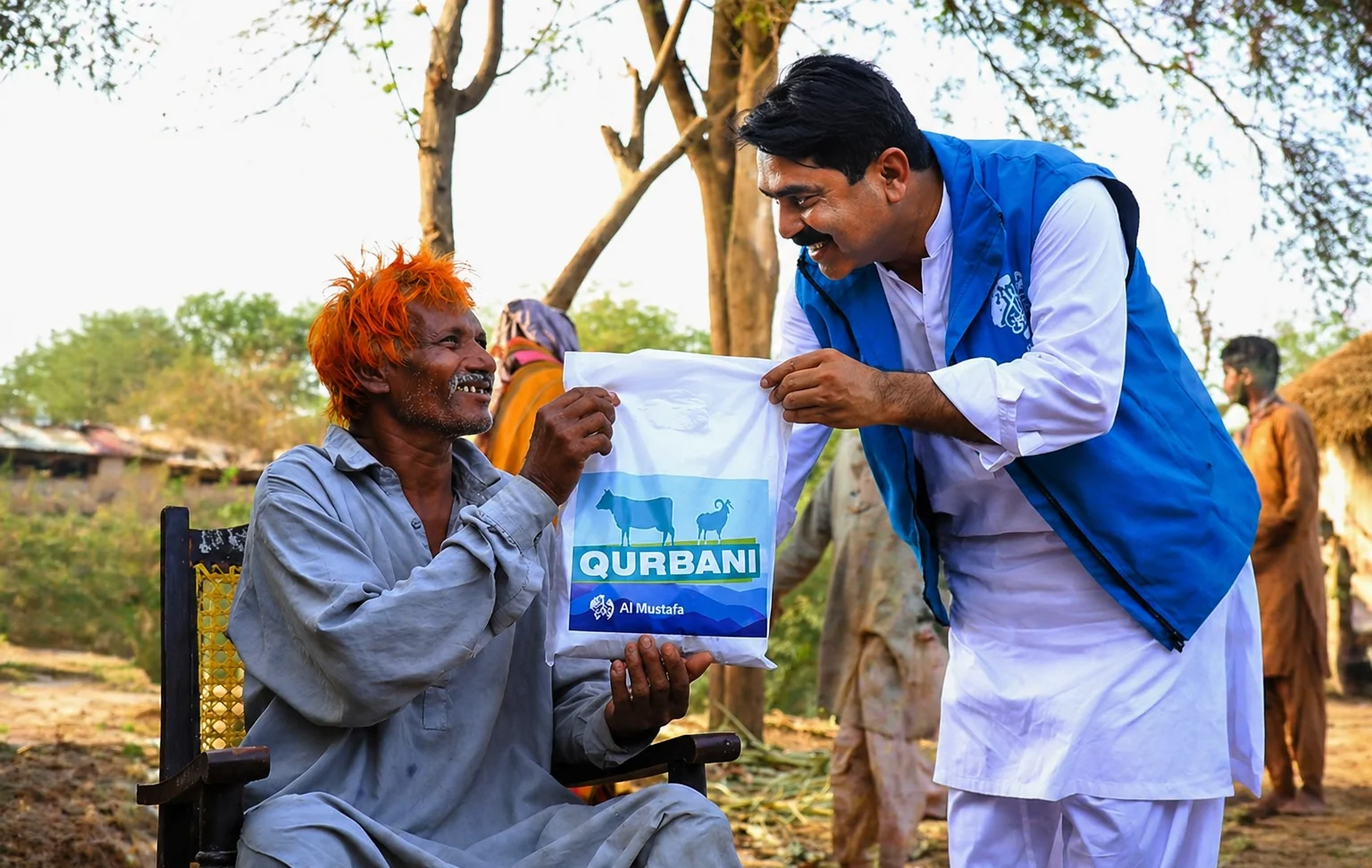
Al Mustafa Welfare Trust will handle meat distribution to the poor and those in remote areas. Our local teams will perform the meat distribution process on your behalf.
Step 4: Make Dua
After the Qurbani, make sincere dua (supplication) for your parents, asking Allah to accept the sacrifice and allow the reward to reach them in the Hereafter.
Is Qurbani on Behalf of Parents Sadaqah Jariyah?
Yes. Offering Qurbani for deceased parents is widely understood by scholars to be a form of Sadaqah Jariyah, an ongoing charity whose reward continues to benefit the deceased even after their death.
The Prophet Muhammad (peace be upon him) said:
When a person dies, their deeds come to an end except for three things: Sadaqah Jariyah, beneficial knowledge, and a righteous child who prays for them.
By performing Qurbani for your deceased parents, you are:
• Keeping the connection alive between you and your parents through worship.
• Earning rewards yourself as the one who initiated this act of devotion.
• Sending spiritual benefit that reaches your parents in their graves, by the mercy of Allah.
• Fulfilling your duty as a child who honors their parents even after their passing.
This makes Qurbani for deceased parents one of the most significant acts of worship a child can offer, a sacred act deeply rooted in the Islamic tradition of honoring one's father and mother.