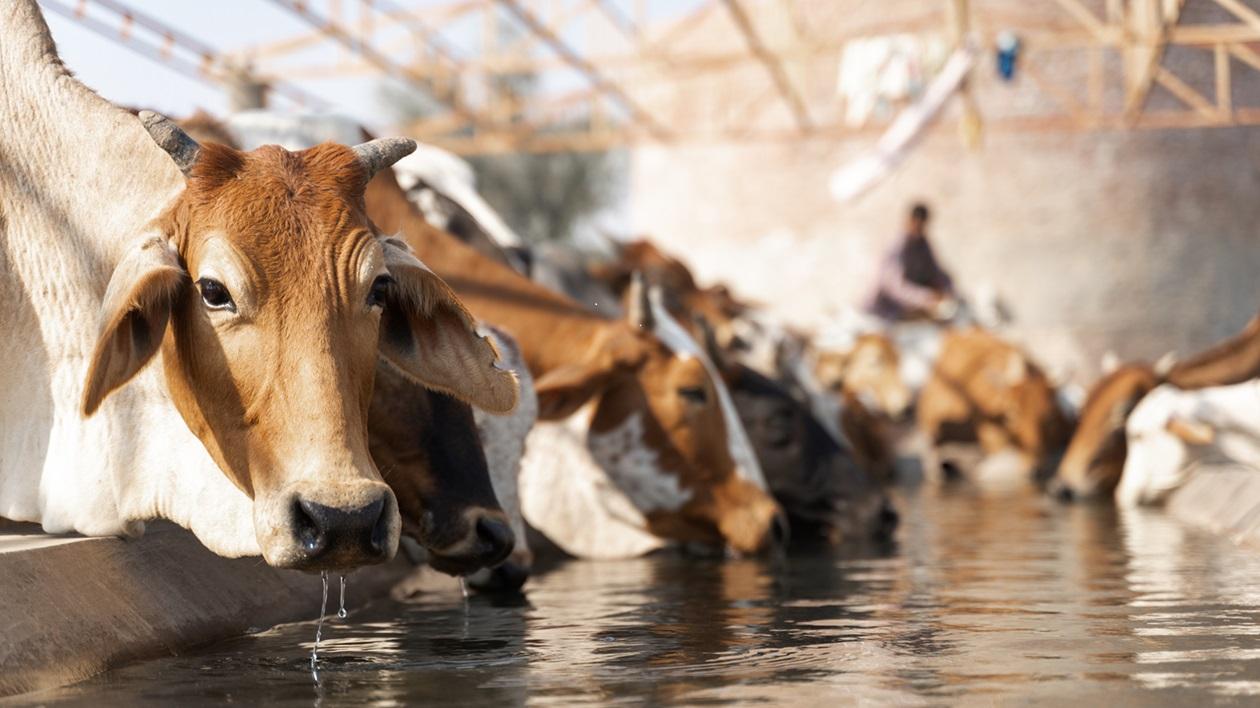
This is why many families pool funds together to sacrifice a cow or buffalo, while individuals often opt for a sheep or goat.
Health Requirements for Qurbani Animal
The animal must be in excellent physical condition. The following defects disqualify an animal from Qurbani:
• Blindness in one or both eyes, or loss of more than one-third of vision
• Severe lameness preventing the animal from walking to the place of slaughter
• Extreme thinness or emaciation (no marrow in the bones)
• Missing more than one-third of the ear or tail
• Broken or missing horns at the root
• Severe illness or visible disease
• Toothlessness (missing more than half the teeth)
Only healthy animals, free from defect, qualify as a valid Qurbani animal.
Qurbani Rules for Slaughtering the Animal
The actual slaughter must follow strict Islamic guidelines to ensure the act is humane, respectful, and pleasing to Allah (SWT).
Slaughter Conditions
• Use a sharp knife to minimise pain and ensure a quick, clean cut. Dull blades cause unnecessary suffering and are forbidden.
• Never sharpen the knife in front of the animal.
• Never slaughter one animal within sight of another.
• Lay the animal gently on its left side, facing the Qibla.
• The slaughter must cut the throat, windpipe, and main blood vessels in one swift motion.
Reciting the Name of Allah and Final Steps
• Recite the name of Allah at the moment of sacrifice. The correct words to recite are:
"Bismillahi Allahu Akbar", In the name of Allah, Allah is the Greatest
• Allow the animal's body to cool completely before skinning begins.
• Ideally, a practising Muslim should perform the slaughter with proper knowledge of the ritual.
While forming a verbal intention (Niyyah) is not strictly required, Allah (SWT) knows the intention of the heart, having the right intention before the sacrifice is essential.
Qurbani Meat Distribution Rules
The proper distribution of Qurbani meat is one of the most beautiful aspects of this act of worship. The Prophet Muhammad (PBUH) instructed believers to divide the meat into three equal portions.
The Three-Part Distribution Rule
Once the Qurbani is performed, divide the meat into three equal portions:
1. One-third for yourself and your family to enjoy fresh meat during Eid celebrations
2. One-third for friends, neighbours, and relatives to strengthen bonds and share joy
3. One-third for the poor and needy to ensure a nutritious meal reaches those who cannot afford it
This division promotes proper distribution, social cohesion, and care for the vulnerable. Distribute the meat on the same day of the sacrifice to ensure freshness, particularly in regions where this may be the only nutritious meal a family receives during Eid al Adha celebrations.
Special Qurbani Rules and Scenarios
Beyond the core rules, there are several specific situations Muslims often ask about.
Qurbani on Behalf of Others
You can perform Qurbani on behalf of:
• Deceased family members, a beautiful way to send ongoing rewards to loved ones who have passed
• Parents, grandparents, or relatives who cannot give Qurbani themselves
• Living family members as a voluntary act of love and worship
Although giving Qurbani on behalf of a deceased person is not obligatory, it is considered a highly blessed act of Sadaqah Jariyah.
Missed Qurbani from Previous Years
However, if you were obligated to perform Qurbani in previous years but missed it, you should:
1. Calculate the total number of missed Qurbanis.
2. Donate the equivalent value as a Qurbani share for each year missed.
3. Make sincere repentance for the delay.
Al Mustafa Welfare Trust can perform missed Qurbanis on your behalf in qualifying countries.
Hair and Nail Trimming During Dhul Hijjah
It is highly recommended for the person performing Qurbani not to cut their hair or trim their nails from the 1st of Dhul Hijjah until after their Qurbani is performed. This practice symbolises personal preparation and spiritual focus during the blessed days.
Prophetic Qurbani (Sunnah Qurbani)
Nevertheless, even if you are not financially obligated, performing a voluntary Qurbani is a highly rewarded act of worship. The Prophet Muhammad (PBUH) himself performed an additional Qurbani on behalf of those in his Ummah who could not afford to do so, a Sunnah many Muslims revive today by donating an extra Qurbani for those less fortunate.
Donate Qurbani with Us!
Al Mustafa Welfare Trust ensures every Qurbani is performed strictly according to Islamic guidelines. Our teams operate across Asia, Africa, and the Middle East, delivering fresh, nutritious meat to families who otherwise wouldn't taste meat throughout the year.