Helpline 0208 569 6444
Send email [email protected]
Address The Old Pumping Station, Pump Alley, Brentford, TW8 0AP
Latest News

Community Breakfast in Honour of the Prophet (PBUH)

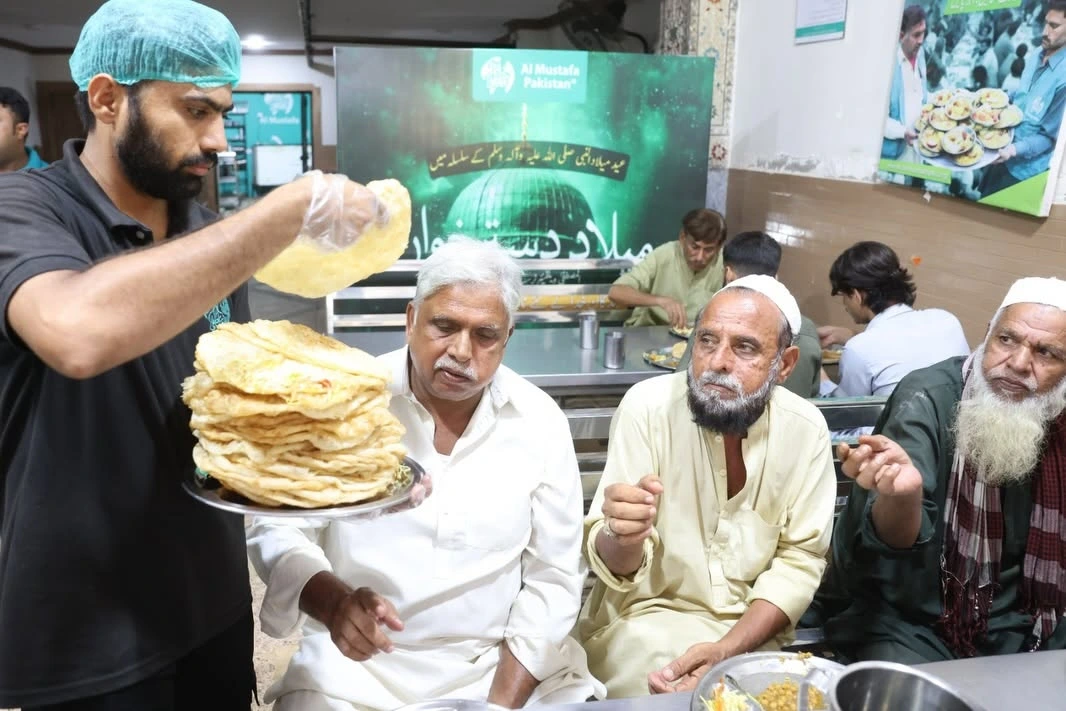
There are many ways to mark the birth of the Prophet Muhammad (PBUH). This Rabi ul Awwal, we chose one that he (PBUH) practised himself: we laid out a Dastarkhwan, opened the doors, and fed whoever walked through them.

What is a Dastarkhwan?

A dastarkhwan is the cloth a family spreads on the floor before a meal, and the word has come to mean far more than the cloth itself. It means the gathering around it. It means that once food is placed down, rank disappears, the labourer and the shopkeeper and the elder all sit at the same level, eat the same food, and rise as guests of the same host.

That is why the Dastarkhwan has always been the heart of hospitality in our part of the world. And it is why, in the month we remember the mercy sent to all creation, it felt like exactly the right thing to spread.

Breakfast, served to whoever came

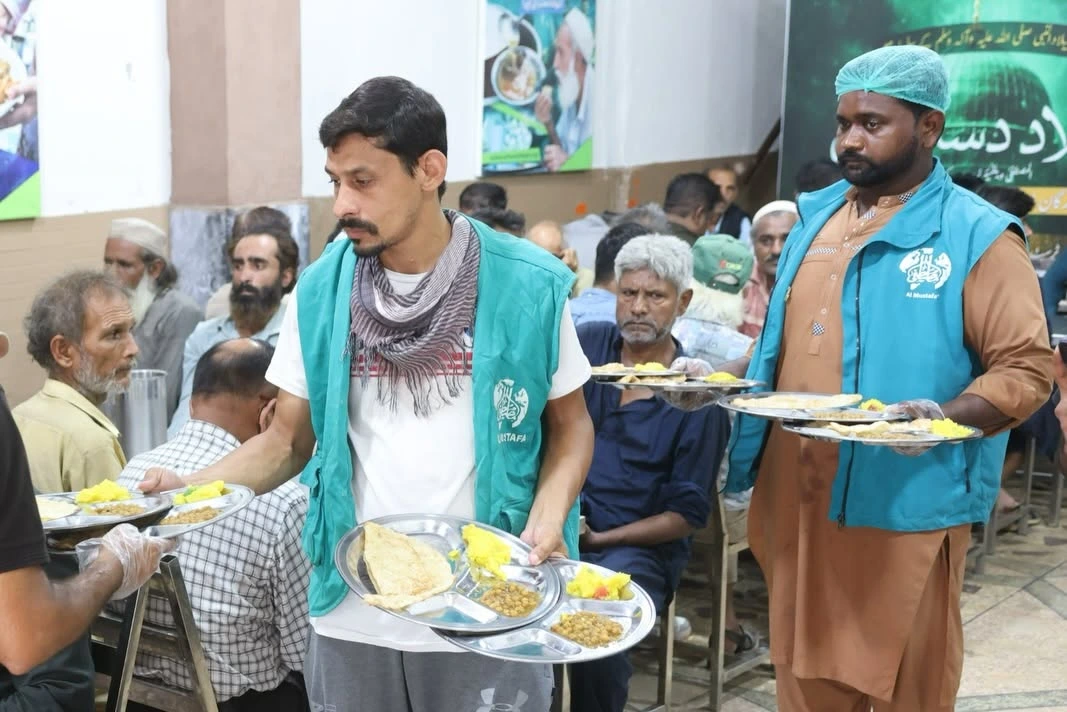
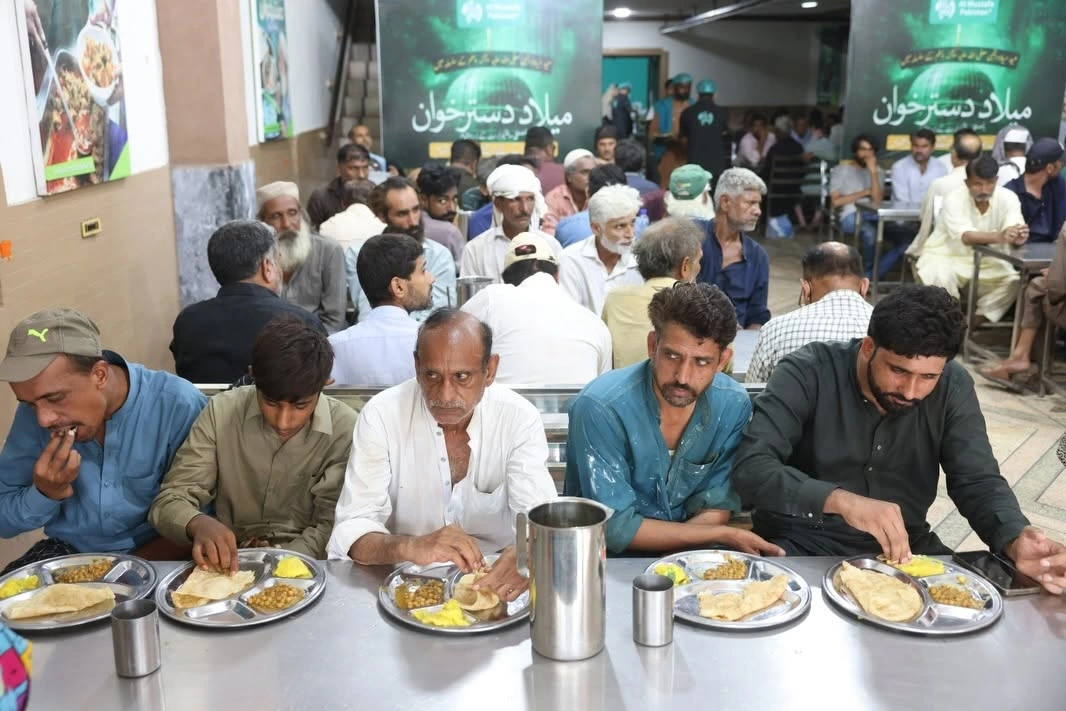
Our team set up a Milad Dastarkhwan and served a full breakfast of puri and halwa to the public, free, with no questions asked at the door, and no one turned away.

Women came. Elders came, some of them slowly, some of them helped to their seats. Young men came in from work. Children came with their fathers. The hall filled, emptied and filled again, and plates kept going out.

There was no register of who deserved it and who did not. That is the point of a Dastarkhwan. You do not audit a guest. You feed them, and you thank Allah that you were able to.

Why food, in this month of all months?

Because feeding people was not a side note in the Prophet's (PBUH) life. It ran straight through it.

"And they give food, in spite of love for it, to the needy, the orphan and the captive."

Surah Al-Insan, 76:8

And when the Prophet (PBUH) arrived in Madinah, among the very first instructions he gave a brand-new community was this:

"O people, spread peace, feed people, maintain family ties, and pray at night while people are sleeping, you will enter Paradise in peace."

Sunan al-Tirmidhi

Before the community had wealth, before it had power, before it had anything much at all, it was told to feed people. Generosity was not what the ummah did once it could afford to. It was how the ummah was built.

He (PBUH) also taught that faith is measured by what happens next door:

"He is not a believer whose stomach is filled while his neighbour goes hungry."

Al-Adab Al-Mufrad

So when we ask how to honour the man Allah called a mercy to the worlds (Surah Al-Anbiya, 21:107), the answer he left us is not complicated. Be a mercy to somebody. Start with a meal.

The part that stays with you

What you remember afterwards is not the quantity of food. It is the quiet.

A hall full of people eating is a surprisingly quiet place. Someone tears a puri and passes half of it sideways without being asked. An older man makes room on the bench for a stranger. A young man fills the water glass next to his own before his own. Nobody has organised any of this. It simply happens, because that is what happens when people are treated as guests instead of as cases.

For a few hours, everyone in that room was somebody's guest. That is a small thing and an enormous one at the same time.

Serving humanity is itself an act of worship

We say this often, and we mean it literally rather than as a slogan. The Prophet (PBUH did not separate worship from service. Standing in prayer and standing over a cooking pot for someone who has not eaten belong to the same religion.

Rabi ul Awwal reminds us of that every year. We love him (PBUH), and love that stays in the chest alone is incomplete. It has to reach a hand, a door, a plate.

Carry it forward

The Dastarkhwan was one morning. Hunger is not.

Long after Rabi ul Awwal ends, families in the communities we serve will still be measuring out flour carefully and hoping it lasts the week. You can keep the Dastarkhwan open for them.

Ways to honour the Prophet (PBUH) this Rabi ul Awwal:

  • Feed a family: support our food aid work through Break the Hunger, and put a meal in front of someone who is going without.
  • Sponsor an orphan: the Prophet (PBUH) was an orphan himself, and promised that the one who cares for an orphan will be with him in Paradise, holding up two fingers together to show how close (Sahih al-Bukhari).
  • Sponsor a Hafiz: help a child carry the Qur'an in their heart for the rest of their life, as ongoing Sadaqah Jariyah.
  • Give where it is needed most: and if you give Zakat, our 100% Zakat Policy means every penny of it reaches the people it was meant for.