Every year, as Ramadan draws to a close, millions of Muslims around the world look to the evening sky with anticipation. Families stay up late, and the words "Have you seen the moon yet?" echo everywhere. That first glimpse of the thin crescent moon signals one of the most joyful moments in the Islamic year, the beginning of Eid al-Fitr.
For 2026, Eid ul Fitr is expected to fall on Friday, 20th March 2026, though as with every year, the exact date depends on the sighting of the crescent moon. Along with that, Thursday 19th or Saturday 21st March (depending on region and moon sighting) are the alternative possible dates.
All Possible Eid ul Fitr Dates for 2026
Possible Date
Day
Condition
Thursday, 19th March 2026
Thursday
If the crescent moon is sighted on Wednesday evening (19th Ramadan eve)
Friday, 20th March 2026 ✓ Expected
Friday
Astronomical prediction — most widely anticipated date globally
Saturday, 21st March 2026
Saturday
If the moon is not visible on Thursday evening in certain regions
What is Eid ul-Fitr? More Than Just a Celebration
The word Eid means "festival" or "celebration" in Arabic. Fitr means "to break the fast." Together, Eid ul-Fitr, also written as Eid al Fitr, translates as the "Festival of Breaking the Fast." It is the celebration that follows Ramadan, the holy month in which Muslims fast from dawn until dusk as one of the Five Pillars of Islam.
It is a day of gratitude, a moment to thank Allah (SWT) for the strength to have completed Ramadan, for the blessings of health, family, and community, and for the opportunity to begin again. It is also a day of compassion. Before a single sweet dish is eaten or a prayer is offered, every Muslim who has the means is expected to give charity, Fitrana, so that no member of the Muslim community is left behind.
Eid al-Fitr is sometimes called "Sweet Eid" or the "Sugar Feast", a nod to the sweet dishes that fill homes and tables on this day. In Turkey, it is known as Şeker Bayramı. In South Asia, the scent of sheer khurma (a rich vermicelli pudding) wafts through every household. In North Africa, honeyed pastries are shared with neighbours.
How the Date of Eid al-Fitr is Decided?
As per Islam, a new month begins only upon the first sighting of the new crescent moon (hilal) after the astronomical new moon. If 29 days of Ramadan have passed and the moon cannot be seen, because it sets too quickly, may be the clouds obscure it, or because it is simply too faint, then Ramadan continues for one more day, completing 30 days, and Eid ul Fitr is observed the following morning.
Zakat al-Fitr - The Charity That Completes Ramadan
There is one act that takes priority above all others on Eid al-Fitr. It is Zakat al-Fitr. And it is one of the most quietly beautiful obligations in Islam.
Zakat al-Fitr (Fitrana) is a mandatory act of charity that every Muslim who has the means must give before the Eid prayer is performed. It is not optional, and it cannot be delayed until after Eid without losing its spiritual purpose. The reason it is given before the prayer is both practical and profound: so that those who cannot afford to celebrate can receive what they need in time to join in the joy of Eid alongside everyone else.
The Prophet Muhammad (PBUH) described it as a purification of the fasting person, a way of cleansing any shortcomings in speech or conduct that may have occurred during the month of Ramadan.
In the words recorded in Sunan Abu Dawud: Fitrana is
"A purification for the fasting person from empty talk and misconduct, and food for the poor and needy."
The day of Eid al-Fitr begins not at the breakfast table, but at the prayer ground. Before the feasting, before the family visits, before the children tear open their Eidi gifts, the Muslim community gathers, together to offer the Eid prayer. It is one of those rare moments when the scale of global Islam becomes viscerally real: millions of people, on the same morning, in open fields and mosques and community halls across every continent, raising their hands and saying Allahu Akbar.
When Are Eid Prayers?
The Eid al-Fitr prayer is performed after the sun has fully risen above the horizon, generally around 15 to 20 minutes after sunrise. It must be completed before the sun reaches its midday peak. In the UK in March 2026, most mosques will hold Eid prayers between approximately 7:00 AM and 10:30 AM, with many venues running multiple congregations to accommodate the large numbers attending.
How to Perform the Eid ul Fitr Prayer — Step by Step
1. Make your intention (Niyyah) to pray two rakats of Eid al Fitr prayer in congregation behind the Imam.
2. Eid Takbeer For Eid ul-Fitr 2026: The Imam begins with the opening Takbeer. It is also known as Takbeer-e-Tashreeq and a Sunnah to recite Eid Takbeer on Eid ul-Fitr.
Allah is the greatest, Allah is the greatest, there is no god but Allah. And Allah is the greatest, Allah is the greatest and to Allah belongs all praise.
Follow by raising your hands and folding them. In the first rakat, six additional Takbirs are then recited, with a brief pause between each.
3. After the additional Takbirs, the Imam recites Surah al-Fatiha followed by another surah aloud. The rakat continues as normal, completing the bow (ruku) and prostration (sujood).
4. In the second rakat, four additional Takbirs are recited before the Imam begins the recitation. The prayer is then completed in the usual manner, ending with the Tasleem (Salaam to both sides).
5. The Eid Khutbah (sermon) follows the prayer, unlike the Friday prayer, where the sermon comes first. It is Sunnah to stay and listen attentively. The Imam may speak about Eid al-Fitr, Zakat al-Fitr, and matters of importance to the community.
6. After the prayer, greet those around you with Eid Mubarak. Follow the Sunnah of the Prophet (PBUH) by returning home via a different route than the one you came.
How Muslims Celebrate Eid al-Fitr?
Once the Eid ul Fitr prayer is done and the Khutbah has concluded, something remarkable happens in streets, homes, and communities around the globe. Strangers embrace. Children run to their home for Eidi. Kitchens fill with the smells of dishes that only come out once a year. Doors that might otherwise stay closed all year swing open. People who have been fasting for a month sit down to eat and there is something in that first proper daytime meal that tastes better than any other.
Eid celebrations last one to three days depending on the country and cultural tradition. In the UK, most families celebrate for a single day, though the joyful mood tends to linger across the weekend. In many Muslim-majority nations, Eid al-Fitr is a public holiday lasting three full days.
Universal Eid ul Fitr Traditions
• New Clothes: Wearing new clothes on Eid day is a beloved Sunnah. Children eagerly wait all Ramadan for their Eid outfit, a simple tradition that carries enormous emotional weight, particularly for families who have saved up just for this day.
• Visiting Family Members and Loved Ones: Eid is the day that extended families come together. Grandparents receive visits. Distant cousins reunite. Old friendships are renewed. In Islam, maintaining the ties of kinship (silat ar-rahim) is a religious duty, and Eid is the occasion when this duty is most joyfully fulfilled.
• Eidi — Gifts and Money for Children: Children receive Eidi, cash gifts or presents from elders and relatives. For many Muslim children, Eid morning is the closest thing to Christmas morning: the anticipation, the excitement, the joy of being celebrated and cherished.
• Charity and Generosity: Beyond the obligatory Zakat al-Fitr, Eid is a day of voluntary giving. Food parcels are shared with neighbours. Restaurant owners give away free meals. Community centres open their doors. The spirit of Ramadan, generosity, compassion, awareness of others, carries into the day that follows it.
• Eid Mubarak Greetings: The most universal Eid greeting is Eid Mubarak, Blessed Eid. The Sunnah greeting exchanged between believers is: Taqabbal Allahu minna wa minkum — May Allah accept from us and from you. Non-Muslims who wish their Muslim friends and colleagues Happy Eid will almost always be met with a warm and grateful smile.
The Night the Eid Season Truly Begins
For millions of Muslims, particularly those with South Asian roots, Eid ul Fitr formally begins not on the morning of Eid, but on the evening before: Chand Raat, the Moon Night. When the crescent moon is sighted (or announced), the streets of Muslim neighbourhoods transform.
In 2026, Chand Raat will be observed on the evening of Thursday, 19th March 2026, the night the crescent moon of Shawwal is expected to be first sighted in the UK sky.
Celebrate Eid al-Fitr with Al Mustafa Welfare Trust in the UK
The United Kingdom is home to one of the most diverse and vibrant Muslim communities in the world. With significant Muslim populations in London, Birmingham, Manchester, Bradford, Leicester, and many other cities, Eid al-Fitr is a truly major occasion in British public life. Tens of thousands of people gather for Eid prayers in parks and sports halls. Local councils increasingly mark Eid with public celebrations.
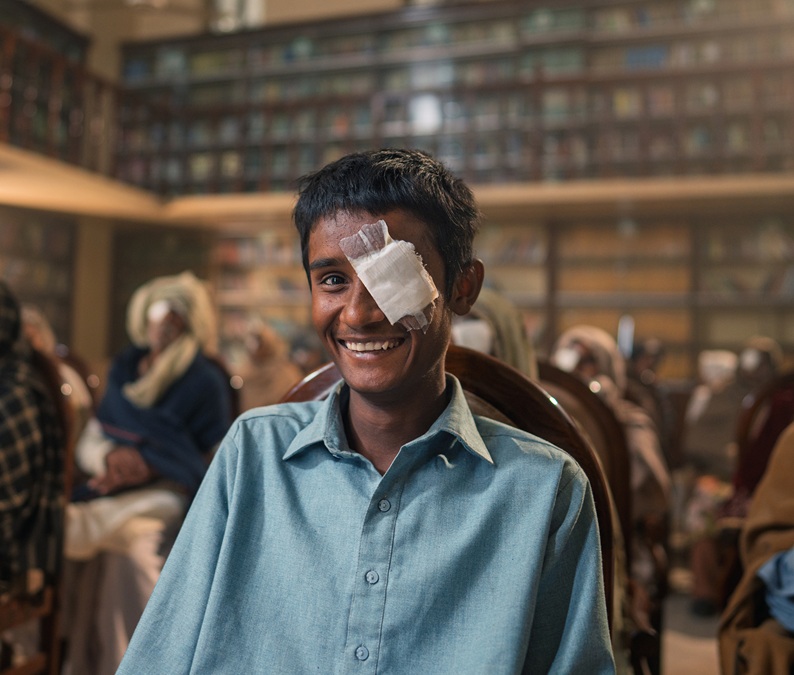
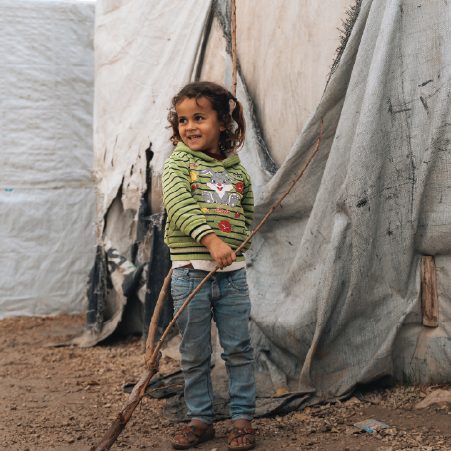
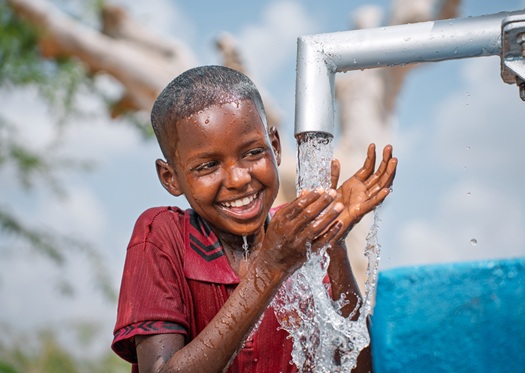
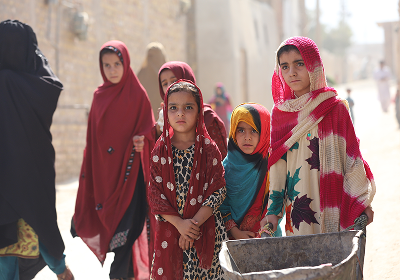
Your Eid ul-Fitr donations can help provide food and new clothing for orphans, support our brothers and sisters in Gaza, and bring joy and comfort to those in need. You can sponsor an Eid gift for an orphan, and we will deliver new clothes, toys, and sweets, with your name included as a gesture of care.
You can also share the blessings of Eid by giving your annual Zakat, Fitrana, and Sadaqah, helping us reach vulnerable families during this special time. We encourage the global Muslim community, especially those in the UK, to remember and support those less fortunate this Eid ul-Fitr 2026.
We use cookies to ensure that we give you the best experience on our website. If you continue to use this site we will assume that you are happy with it.